
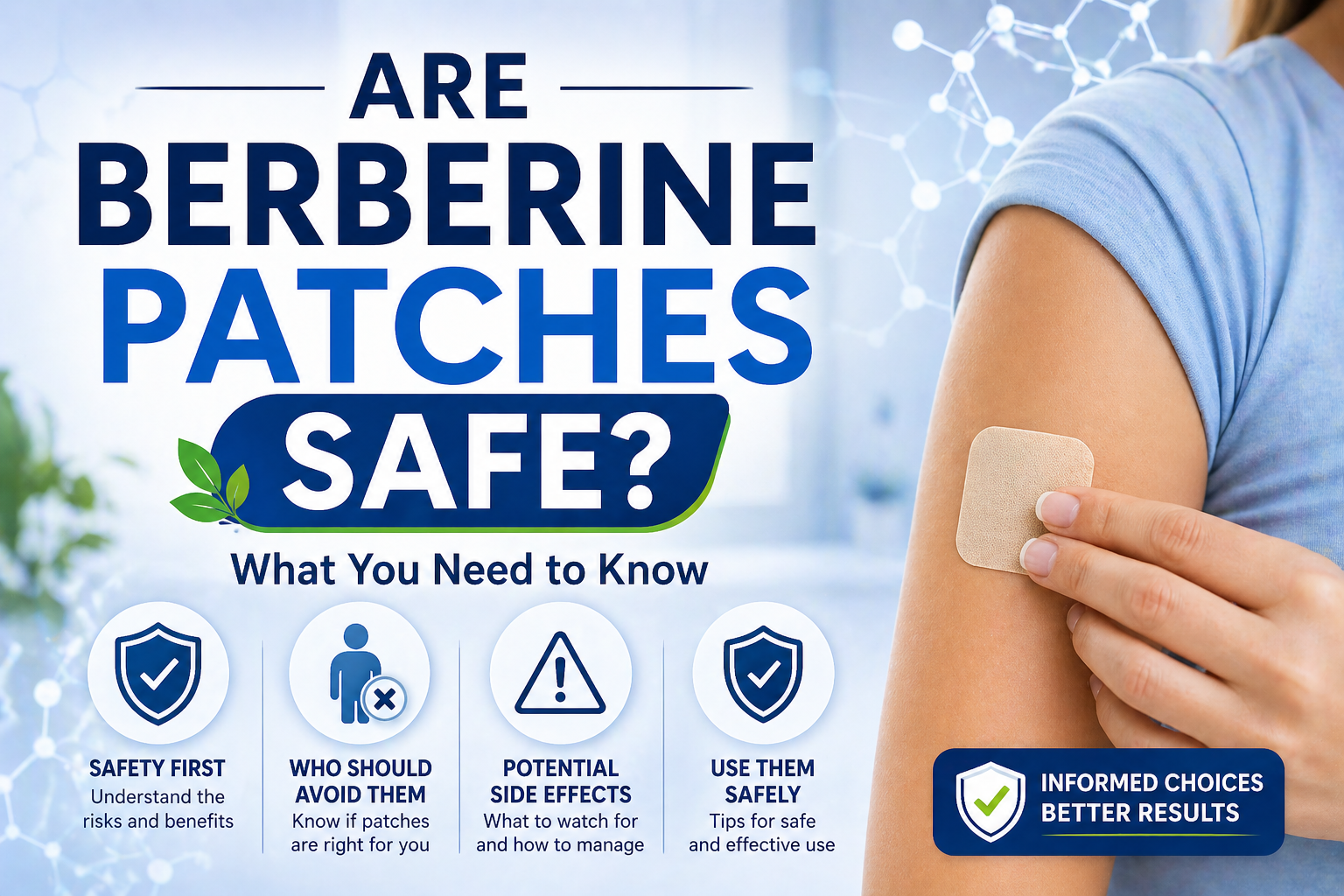
Berberine patches are generally considered safe for many people when used as directed. However, like any supplement or delivery system, safety depends on several factors including product quality, individual health conditions, and proper use. While berberine itself has been widely studied, the transdermal delivery method is still developing, which means users should approach these products with informed expectations. If you’re new to berberine patches, start here: 👉 Berberine Patches: Benefits, Limits, Safety & Buying Guide
How Berberine Affects the Body
Berberine is a natural compound known for its potential effects on: blood sugar regulation, insulin sensitivity, and metabolic function. Because of these effects, it may interact with certain medications or conditions. To understand how it is delivered through the skin: 👉 How Berberine Patches Work: Transdermal Delivery Explained
Are Berberine Patches Safe to Use Daily?
For most users, daily use may be safe when following instructions. However, long-term safety depends on: consistent dosage, skin tolerance, and underlying health conditions. Unlike oral supplements, patches deliver a continuous release, which may affect how the body responds over time.
Possible Side Effects of Berberine Patches
1. Skin Irritation
The most common issue is mild irritation caused by: adhesives, friction, and sensitive skin.
2. Allergic Reactions
Some individuals may react to ingredients or patch materials.
3. Systemic Effects (Less Common)
Because berberine can influence blood sugar, some users may experience: lightheadedness and changes in glucose levels.
Who Should Avoid Berberine Patches?
Berberine patches may not be suitable for: pregnant or breastfeeding individuals, people taking blood sugar medications, individuals with chronic medical conditions, and those with highly sensitive or reactive skin.
Do Berberine Patches Interact with Medications?
Yes, potentially. Berberine may interact with: diabetes medications, blood pressure medications, and certain antibiotics. If you are taking medication, consult a healthcare professional before use.
Are Berberine Patches Safer Than Capsules?
Not necessarily — they are simply different.
Patches
Avoid digestion, may reduce GI side effects, variable absorption.
Capsules
More predictable dosing, strong research backing, possible digestive discomfort. For a full comparison: 👉 Berberine Patches vs Capsules: Which Is Better?
How to Use Berberine Patches Safely
To reduce risk: apply to clean, dry skin, rotate application areas, follow product instructions carefully, and avoid damaged or irritated skin. For full usage instructions: 👉 How to Use Metabolic Patches Correctly
What to Look for in a Safe Berberine Patch
Choose products that: have transparent ingredient lists, use high-quality adhesives, provide clear dosage information, and avoid exaggerated claims.
Are Berberine Patches FDA Approved?
Most berberine patches are classified as supplements, not medications. This means: they are not FDA-approved in the same way as drugs, and quality can vary between brands. This makes choosing reputable products even more important.
Do Berberine Patches Have Long-Term Risks?
Long-term risks are not fully established due to limited research on transdermal berberine. However, responsible use and monitoring your body’s response can help reduce potential risks.
Final Verdict: Are Berberine Patches Safe?
Berberine patches may be safe for many individuals when used correctly, but they are not risk-free. Safety depends on: product quality, proper use, and individual health status. If you want to compare safer, well-reviewed options: 👉 Best Berberine Patches of 2026
RELATED ARTICLES
- Berberine Patches: Benefits, Limits, Safety & Buying Guide
- How Berberine Patches Work: Transdermal Delivery Explained
- Transdermal Supplements: Do They Really Work?
- How to Use Metabolic Patches Correctly
- Metabolic Patch Reviews
Frequently Asked Questions About Berberine Patch Safety
Are berberine patches safe?
Berberine patches may be safe for many people when used as directed, but they are not risk-free. Safety depends on the product quality, ingredients, dosage, skin tolerance, and your personal health situation.
Can berberine patches cause side effects?
Yes. Possible side effects may include skin irritation, redness, itching, adhesive sensitivity, or discomfort at the application site. Because berberine may affect blood sugar, some users should also be cautious about systemic effects.
Who should avoid berberine patches?
Pregnant or breastfeeding individuals, people taking blood sugar medications, those with chronic medical conditions, and anyone with highly sensitive skin should avoid using berberine patches unless cleared by a healthcare professional.
Can berberine patches interact with medication?
Yes, berberine may interact with medications, especially drugs used for blood sugar control, blood pressure, or certain infections. Anyone taking prescription medication should speak with a healthcare professional before use.
Are berberine patches safer than capsules?
Not necessarily. Patches may reduce digestive discomfort because they bypass the stomach, but capsules have stronger clinical research and more predictable dosing. The safer option depends on the individual and the product.
Can you use berberine patches every day?
Some products are designed for daily use, but you should always follow the instructions on the label. Daily use may not be suitable for everyone, especially people with medication use, sensitive skin, or underlying health conditions.
What should I do if a berberine patch irritates my skin?
Remove the patch, wash the area gently, and avoid applying another patch to the irritated area. If redness, itching, swelling, or discomfort continues, stop use and seek medical advice.
Are berberine patches FDA approved?
Most berberine patches are sold as supplements or wellness products, not approved medications. This means they are not evaluated in the same way as prescription drug patches.
How can I choose a safer berberine patch?
Look for transparent ingredient lists, clear usage directions, reputable manufacturing, realistic claims, and user feedback. Avoid products that promise extreme or instant weight loss or blood sugar results.
Should I ask a doctor before using berberine patches?
Yes, especially if you take medication, have diabetes, are pregnant or breastfeeding, have a medical condition, or are unsure whether berberine is appropriate for you.
Looking for Safe, High-Quality Berberine Patches?
Compare trusted options based on ingredients, safety, and real user feedback.
View Top Berberine Patches
Reviewed for Accuracy & Transparency
This page was reviewed for factual accuracy, source quality, safety wording, affiliate transparency, and alignment with our editorial policy. It is not medical advice and should not replace guidance from a qualified healthcare professional.
Written by The Metabolic Patch Editorial Team
The Metabolic Patch Editorial Team researches metabolic wellness patches, ingredient claims, product safety considerations, pricing, refund policies, and affiliate transparency. Our goal is to help readers make informed decisions using evidence-informed, clearly sourced, and commercially transparent content.
Affiliate Transparency
Some links on this page may be affiliate links. If you purchase through these links, The Metabolic Patch may earn a commission at no extra cost to you. Our reviews are designed to remain evidence-informed, safety-conscious, and transparent.
Important Safety Note
Dietary supplements and wellness patches are not intended to diagnose, treat, cure, or prevent disease. If you are pregnant, breastfeeding, taking medication, managing a medical condition, or have sensitive skin, speak with a qualified healthcare professional before using any new supplement or patch product.