
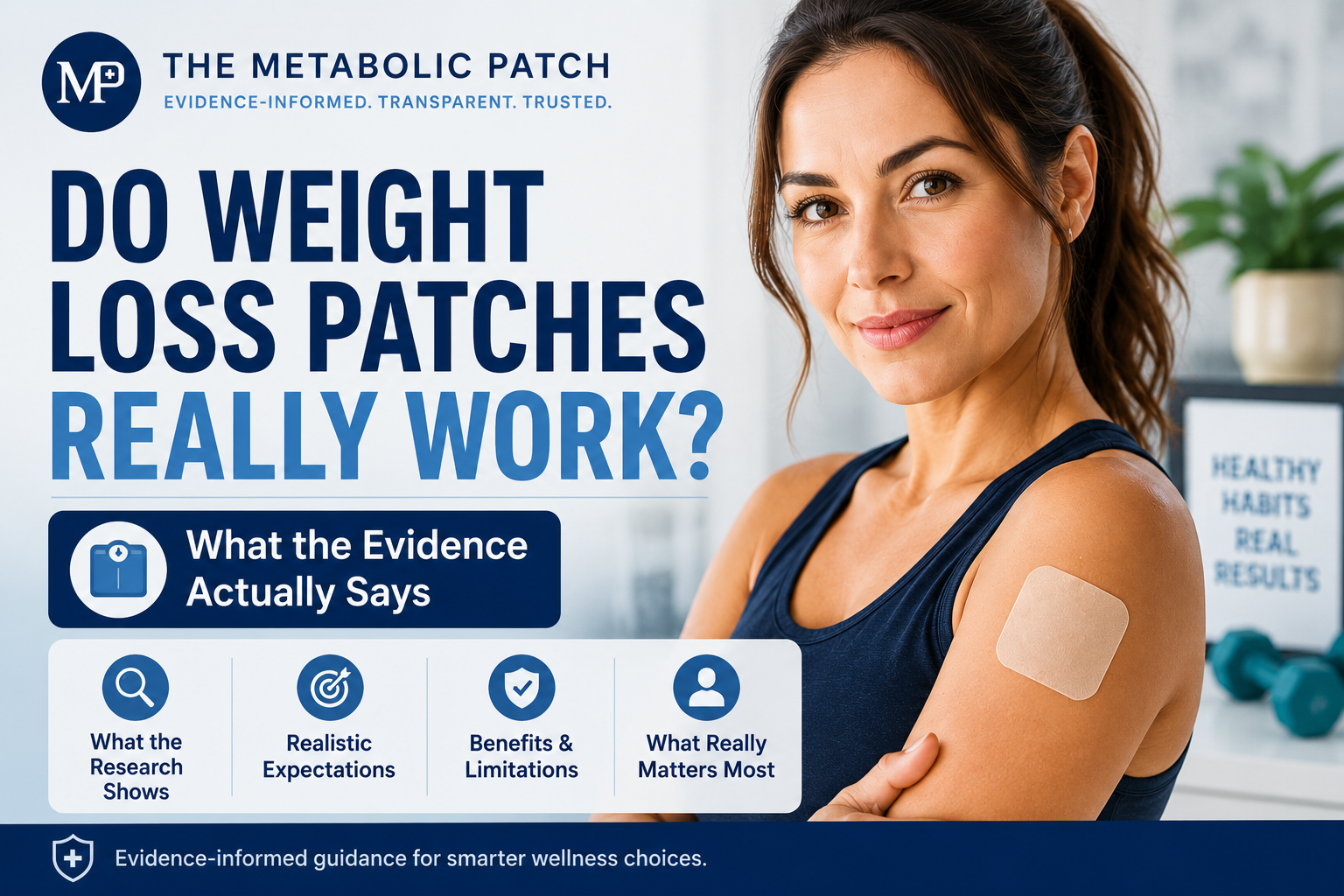
Weight loss patches are increasingly promoted as convenient wellness products designed to support metabolism, appetite awareness, energy balance, and healthy lifestyle routines through transdermal ingredient delivery. As interest in non-pill wellness products grows, many consumers are asking an important question: Do weight loss patches actually work — or are they mostly marketing hype? The answer is more nuanced than many advertisements suggest. Some users report positive experiences with wearable wellness patches, particularly when patches are combined with broader lifestyle improvements such as healthier eating habits, increased physical activity, improved sleep, and long-term consistency. However, current evidence surrounding weight loss patches remains mixed, especially because direct clinical research involving many patch-based delivery systems is still relatively limited.
This guide explores:
- what weight loss patches are designed to do
- how transdermal delivery works
- where evidence appears stronger or weaker
- why realistic expectations matter
- how consumer psychology may influence perceived results
- why patches are better viewed as supportive wellness tools rather than miracle solutions
Readers new to this category may also wish to explore our guides on Transdermal Supplements, Best Weight Loss Patches, and the complete Metabolic Patch Guide.
What Consumers Should Understand First
- Weight loss patches are not magic fat-burning solutions.
- Patch-based research remains more limited than traditional supplement research.
- Results may vary significantly between individuals.
- Consistency and lifestyle habits still matter most.
- Many products rely heavily on marketing language rather than strong clinical evidence.
- Patches may be better viewed as supportive wellness tools rather than standalone weight loss systems.
What Are Weight Loss Patches?
Weight loss patches are wearable wellness products designed to release ingredients slowly through the skin over several hours. Unlike capsules, powders, or drinks, patches are applied directly to the body and worn throughout the day. Many products in this category are marketed using claims related to: metabolism support, appetite awareness, energy balance, calorie management, cravings support, and lifestyle adherence. Some weight loss patches contain ingredients such as: berberine, caffeine, green tea compounds, herbal extracts, vitamins, and amino acids. However, ingredient quality, absorption efficiency, and formulation transparency can vary substantially between products. Readers interested in ingredient-focused discussions may also wish to explore our guides on Berberine for Weight Loss and Berberine Patches.
How Transdermal Delivery Differs
One reason weight loss patches attract attention is because they offer a non-pill alternative to traditional supplementation. Instead of being swallowed and processed through digestion, patches are designed to deliver ingredients gradually through the skin over time. Potential advantages often promoted include: convenient daily application, steady ingredient release, easier long-term consistency, avoiding digestive discomfort from capsules, and simplified supplement routines. However, transdermal delivery also has important limitations. Not all ingredients absorb efficiently through the skin, and the effectiveness of delivery systems may depend on factors such as: molecular size, ingredient formulation, patch adhesion quality, skin permeability, wear time, and environmental conditions. This is one reason why scientific evidence surrounding transdermal wellness products remains more complicated than marketing often suggests.
| Potential Advantages | Important Limitations |
|---|---|
| Convenient once-daily use | Patch absorption may vary between individuals |
| May support routine consistency | Limited patch-specific clinical research |
| Non-pill alternative | Marketing claims may exceed available evidence |
| Steady delivery design | Lifestyle habits still remain the primary factor in long-term weight management |
What Does the Evidence Actually Say?
The evidence surrounding weight loss patches is mixed. Some ingredients commonly used in patches — such as caffeine, green tea compounds, or berberine — have been studied in traditional oral supplement form. However, direct evidence involving patch-based delivery systems is often more limited. This distinction is extremely important. A product may contain ingredients that have been researched independently, but that does not automatically confirm the same effectiveness when delivered through a wearable patch system. At present: evidence for some ingredients appears stronger than evidence for many patch systems themselves, some studies suggest potential metabolic support effects, patch-specific human trials remain relatively limited, and long-term outcome data is still developing. Consumers should therefore approach dramatic marketing claims carefully, especially claims involving: rapid fat loss, guaranteed weight reduction, effortless body transformation, “melting fat”, or overnight metabolic changes.
Why Some People Report Positive Results
Despite limited evidence in some areas, many consumers still report positive experiences with wearable wellness patches. There are several possible explanations for this.
Lifestyle Adherence
One of the biggest factors may simply be improved consistency. People who wear a daily patch may become more conscious of: food choices, hydration, movement, sleep quality, and health routines. This increased awareness alone may indirectly support healthier habits.
Structured Wellness Routines
Some consumers use patches as part of broader lifestyle systems that include: calorie management, exercise, improved sleep, stress reduction, and mindful eating. In these situations, patches may function more as behavioral support tools rather than standalone fat-loss solutions.
Placebo & Expectation Effects
Consumer psychology can also influence perceived results. When individuals strongly expect a product to help, motivation and behavior may change in subtle ways that influence outcomes. This does not necessarily mean experiences are “fake,” but it does highlight why controlled scientific research is important.
Weight Loss Patches Should Not Replace Healthy Habits
Long-term weight management is influenced by many factors, including nutrition quality, physical activity, sleep, stress management, medical conditions, and long-term behavioral consistency.
Even supportive wellness products are unlikely to overcome poor lifestyle habits on their own.
Are Some Weight Loss Patch Claims Exaggerated?
Yes — some marketing in the wearable wellness industry appears more aggressive than current evidence supports. Common examples include: unrealistic before-and-after imagery, guaranteed fat-burning claims, “scientific breakthrough” language, exaggerated metabolism promises, and oversimplified explanations of complex metabolic processes. Consumers should be cautious of products that rely primarily on emotional marketing rather than transparent evidence discussions. This is one reason why evidence-informed comparisons and balanced expectations matter. Readers comparing different products may also wish to explore: Best Weight Loss Patches, Natural GLP-1 Patches, and Metabolic Patch Reviews.
So… Do Weight Loss Patches Really Work?
The most accurate answer is: Some people may find weight loss patches helpful as supportive wellness tools, but current evidence does not support viewing them as miracle weight loss solutions. Certain products may help support consistency, wellness routines, or behavioral awareness when combined with broader lifestyle improvements. However, patch effectiveness likely varies significantly depending on: ingredient quality, formulation, patch design, user consistency, overall health habits, and individual physiology. Consumers should approach the category with realistic expectations and prioritize evidence-informed decision-making over marketing hype.
Reasonable Expectations
- Supportive wellness tool positioning
- May assist routine consistency
- Potential behavioral support
- Works best alongside healthy habits
Unrealistic Expectations
- Rapid effortless fat loss
- Guaranteed body transformation
- Replacing nutrition and exercise
- Miracle metabolism claims
Final Thoughts
Weight loss patches remain an evolving category within the broader wearable wellness market. While some ingredients associated with these products have been researched independently, patch-specific evidence still remains limited in many cases. For some individuals, patches may provide a convenient way to support routine consistency and wellness awareness. However, they are generally best viewed as supportive tools rather than standalone solutions. Consumers interested in wearable wellness products should prioritize: realistic expectations, transparent ingredient information, evidence-informed positioning, long-term lifestyle habits, and cautious evaluation of marketing claims.
FAQS
Do weight loss patches actually burn fat?
Current evidence does not strongly support the idea that weight loss patches directly “burn fat” in a dramatic way. Some products may support wellness routines or appetite awareness, but long-term results still depend heavily on lifestyle habits.
Are weight loss patches scientifically proven?
Scientific evidence involving weight loss patches remains mixed. Some ingredients have been studied independently, but direct patch-specific research is still relatively limited.
Do weight loss patches work without diet or exercise?
Most evidence suggests that healthy nutrition, physical activity, sleep, and consistency remain far more important than any standalone wellness product.
Why do some people say weight loss patches help?
Some users may experience benefits related to routine consistency, wellness awareness, behavioral support, or placebo-related expectation effects.
Are transdermal supplements effective?
Some transdermal delivery systems may provide effective absorption for certain ingredients, but absorption efficiency varies depending on formulation and ingredient type.
Should weight loss patches replace medical treatment?
No. Weight loss patches should not replace medical care, prescription treatment, or professional guidance.
RELATED ARTICLES
- Are Metabolic Patches FDA Approved?
- Best Weight Loss Patches
- Transdermal Supplements
- Berberine for Weight Loss
- Natural GLP-1 Patches
- Metabolic Patch Guide
Explore Metabolic Patch Research, Safety & Comparisons
Learn how metabolic patches work, compare leading products, review safety discussions, and understand realistic expectations before trying wearable wellness products.

Reviewed for Accuracy & Transparency
This page was reviewed for factual accuracy, source quality, safety wording, affiliate transparency, and alignment with our editorial policy. It is not medical advice and should not replace guidance from a qualified healthcare professional.
Written by The Metabolic Patch Editorial Team
The Metabolic Patch Editorial Team researches metabolic wellness patches, ingredient claims, product safety considerations, pricing, refund policies, and affiliate transparency. Our goal is to help readers make informed decisions using evidence-informed, clearly sourced, and commercially transparent content.
Affiliate Transparency
Some links on this page may be affiliate links. If you purchase through these links, The Metabolic Patch may earn a commission at no extra cost to you. Our reviews are designed to remain evidence-informed, safety-conscious, and transparent.
Important Safety Note
Dietary supplements and wellness patches are not intended to diagnose, treat, cure, or prevent disease. If you are pregnant, breastfeeding, taking medication, managing a medical condition, or have sensitive skin, speak with a qualified healthcare professional before using any new supplement or patch product.