
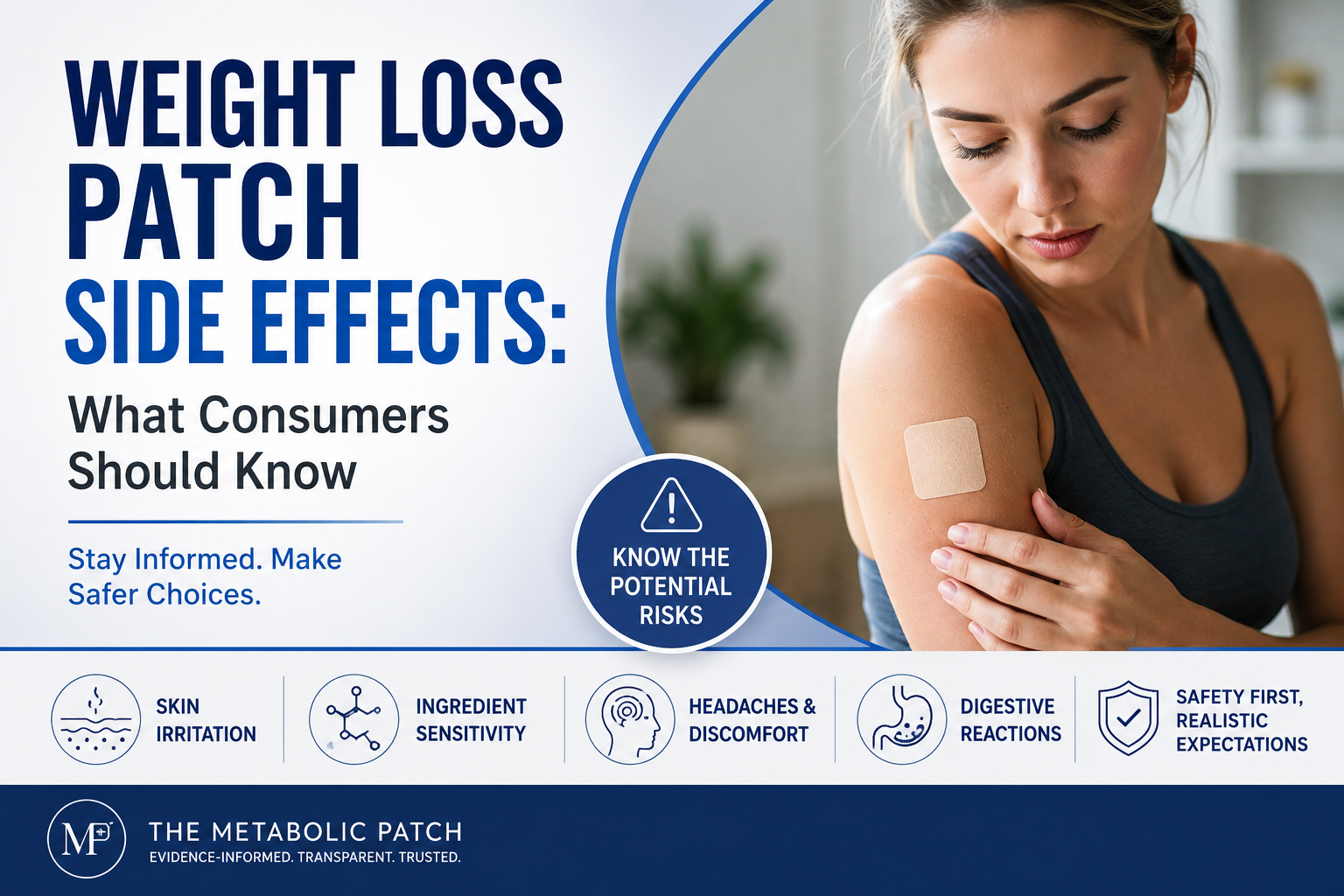
Weight loss patches are increasingly marketed as convenient wearable wellness products designed to support metabolism, appetite awareness, energy, or healthy lifestyle routines. However, many consumers researching these products understandably want to know about potential side effects before trying them.
The reality is that weight loss patch side effects can vary depending on the ingredients used, adhesive materials, individual skin sensitivity, underlying health conditions, and how the patch is applied. Some users report mild localized skin irritation, while others may experience no noticeable issues at all.
Importantly, most weight loss patches are marketed as wellness products rather than FDA-approved medications, meaning scientific evidence may be limited for some products and formulations. The U.S. Food and Drug Administration (FDA) does not evaluate most wellness patches in the same way prescription medications are reviewed for safety and effectiveness. Understanding realistic safety expectations — rather than relying on exaggerated marketing claims — is an important part of making informed decisions.
In this guide, we’ll explore common side effects associated with weight loss patches, why reactions may occur, who may need extra caution, and how consumers can evaluate wearable wellness products more carefully.
Readers exploring broader patch safety topics may also want to review our guides on Are Metabolic Patches FDA Approved?, Berberine Patch Safety, Transdermal Supplements, and Can Berberine Patches Cause Skin Irritation?.
Common Weight Loss Patch Side Effects
Not everyone experiences side effects from wearable wellness patches, but some individuals may notice mild or temporary reactions depending on their skin sensitivity, ingredient tolerance, and patch usage habits.
Skin Irritation
Some users may experience redness, itching, or mild adhesive sensitivity where the patch is applied.
Ingredient Sensitivity
Certain active ingredients may potentially trigger mild reactions in individuals with sensitivities.
Headaches & Discomfort
A small number of users report headaches, dizziness, or mild discomfort while adjusting to certain products.
Digestive Symptoms
Some ingredients may potentially contribute to bloating, nausea, or mild digestive upset in sensitive users.
Many reactions appear to involve the adhesive component rather than the active ingredients themselves. However, some formulations may contain herbal compounds or stimulatory ingredients that certain individuals may be more sensitive to.
Why Side Effects Can Happen
Weight loss patch side effects may happen for different reasons depending on the adhesive, ingredients, wear time, and individual skin sensitivity.
Adhesive Reactions
Some users may react to the adhesive material, especially if they have sensitive skin or a history of reactions to bandages or tapes.
Ingredient Sensitivity
Certain botanical extracts, stimulants, or active compounds may affect sensitive individuals differently, even when used in patch form.
Wear Time & Application
Leaving patches on too long, applying them to irritated skin, or using the same area repeatedly may increase discomfort or irritation risk.
Why Skin Irritation Is One Of The Most Common Complaints
Because weight loss patches remain attached to the skin for several hours, localized skin reactions are among the most frequently discussed side effects.
Potential contributing factors may include:
- adhesive sensitivity
- friction from prolonged wear
- heat and moisture buildup
- frequent use on the same area
- pre-existing skin conditions
- ingredient sensitivity
For some individuals, rotating application sites and following manufacturer instructions carefully may help reduce irritation risk.
Patch Safety Reminder
Consumers with sensitive skin, eczema, adhesive allergies, or prior reactions to wearable products may want to use additional caution when exploring transdermal wellness patches.
Can Weight Loss Patch Ingredients Cause Side Effects?
Some weight loss patches contain ingredients commonly associated with metabolism or appetite-support supplements, including:
- berberine
- green tea extract
- caffeine-related compounds
- capsaicin
- L-carnitine
- herbal blends
Even though patches use transdermal delivery methods, certain ingredients may still contribute to mild side effects in some individuals depending on sensitivity, dosage, overall health status, and concurrent supplement use.
Potential ingredient-related symptoms may include:
- headaches
- digestive discomfort
- mild dizziness
- jitters or nervousness
- changes in appetite
- sleep disturbances from stimulatory compounds
Scientific evidence surrounding patch-specific ingredient absorption remains limited in many cases, which is why realistic expectations and cautious interpretation are important.
Who Should Be More Cautious?
Some individuals may wish to speak with a qualified healthcare professional before using wearable wellness patches, particularly those who:
- have sensitive skin or adhesive allergies
- use diabetes or blood sugar medications
- are pregnant or breastfeeding
- manage chronic medical conditions
- are sensitive to stimulant-type ingredients
- take multiple medications or supplements
Individuals researching medication-related concerns may also want to review our guide on Can You Use Berberine Patches With Medication?.
How To Reduce The Risk Of Side Effects
Consumers exploring weight loss patches may be able to reduce irritation risk and improve overall patch experience by following practical safety habits.
- follow manufacturer instructions carefully
- avoid applying patches to damaged skin
- rotate application areas
- monitor for irritation or unusual symptoms
- avoid excessive patch wear duration
- review ingredient labels carefully
- avoid combining multiple stimulatory products
Because responses may vary between individuals, there is no guarantee that every user will experience the same results or side effect profile.
Do Weight Loss Patches Have Strong Scientific Evidence?
One important consideration is that many weight loss patches currently have limited large-scale clinical evidence specifically evaluating patch-based delivery systems for long-term weight management.
Organizations such as the National Center for Complementary and Integrative Health (NCCIH) regularly emphasize the importance of evaluating supplement-related claims carefully, particularly when long-term clinical evidence remains limited.
Some ingredients contained within patches may have preliminary research related to metabolism or blood sugar support, but this does not automatically confirm that every patch product will produce meaningful or consistent results.
Consumers should be cautious of products claiming:
- overnight fat loss
- guaranteed rapid results
- miracle metabolism effects
- effortless weight reduction without lifestyle changes
- dramatic before-and-after transformations
Most experts would likely view wearable wellness patches as supportive tools rather than standalone solutions.
How To Evaluate Weight Loss Patches More Carefully
Consumers researching wearable wellness products may benefit from evaluating products using a more evidence-informed approach.
Helpful questions may include:
- Are ingredients clearly disclosed?
- Are safety warnings provided?
- Does the company avoid unrealistic promises?
- Are refund policies transparent?
- Are scientific limitations acknowledged?
- Does the product appear overly hype-driven?
Readers wanting broader category comparisons may also want to explore:
When To Stop Using A Patch
If symptoms become persistent or uncomfortable, users may wish to discontinue use and seek professional guidance.
- Persistent redness or irritation
- Swelling or rash
- Severe itching or discomfort
- Dizziness or worsening symptoms
- Unexpected reactions after repeated use
Realistic Expectations Matter
Weight loss patches should generally be viewed as supportive wellness tools rather than standalone fat-loss solutions or rapid transformation products.
Final Thoughts
Weight loss patch side effects are often described as mild and temporary, particularly when compared with stronger medical interventions. However, skin irritation, adhesive sensitivity, ingredient reactions, and unrealistic expectations remain important considerations for consumers exploring these products.
Because scientific evidence for many wearable wellness patches is still evolving, consumers should approach exaggerated claims cautiously and prioritize balanced, evidence-informed evaluation over hype-driven marketing.
For readers new to this category, our Metabolic Patch Guide provides a broader overview of patch safety, transdermal delivery, comparisons, and realistic wellness expectations.
FAQ
Can weight loss patches cause skin irritation?
Yes, some individuals may experience mild skin irritation, redness, itching, or adhesive sensitivity from wearable patches.
Are weight loss patches FDA approved?
Most weight loss patches are marketed as wellness products rather than FDA-approved medications.
Do weight loss patches have side effects?
Potential side effects may include skin irritation, headaches, digestive discomfort, or sensitivity to certain ingredients.
Can stimulants in weight loss patches affect sleep?
Some patches may contain stimulatory ingredients that could potentially contribute to sleep disturbances in sensitive individuals.
Who should avoid weight loss patches?
Individuals with sensitive skin, certain medical conditions, medication interactions, or stimulant sensitivities may want additional caution.
Are weight loss patches scientifically proven?
Scientific evidence for many weight loss patches remains limited, particularly regarding long-term effectiveness and transdermal absorption consistency.
Can adhesive patches trigger allergic reactions?
Some users may react to adhesives or topical ingredients, particularly if they have a history of skin sensitivities.
Are weight loss patches safer than diet pills?
Safety depends on the ingredients, individual health status, and how products are used. Some users may tolerate patches differently than oral supplements.
Can you wear weight loss patches every day?
Consumers should follow manufacturer instructions carefully and avoid excessive or prolonged patch wear beyond recommended use.
Do weight loss patches work without diet and exercise?
Most evidence-informed approaches position wearable wellness patches as supportive tools rather than standalone solutions.
Explore Metabolic Patch Safety & Evidence
Learn how wearable wellness patches work, what realistic expectations look like, how to evaluate safety claims, and which factors consumers should consider before use.

References & Educational Sources
This article was prepared using evidence-informed editorial standards and reviewed against reputable public health and medical education resources.
Reviewed for Accuracy & Transparency
This page was reviewed for factual accuracy, source quality, safety wording, affiliate transparency, and alignment with our editorial policy. It is not medical advice and should not replace guidance from a qualified healthcare professional.
Written by The Metabolic Patch Editorial Team
The Metabolic Patch Editorial Team researches metabolic wellness patches, ingredient claims, product safety considerations, pricing, refund policies, and affiliate transparency. Our goal is to help readers make informed decisions using evidence-informed, clearly sourced, and commercially transparent content.
Affiliate Transparency
Some links on this page may be affiliate links. If you purchase through these links, The Metabolic Patch may earn a commission at no extra cost to you. Our reviews are designed to remain evidence-informed, safety-conscious, and transparent.
Important Safety Note
Dietary supplements and wellness patches are not intended to diagnose, treat, cure, or prevent disease. If you are pregnant, breastfeeding, taking medication, managing a medical condition, or have sensitive skin, speak with a qualified healthcare professional before using any new supplement or patch product.