
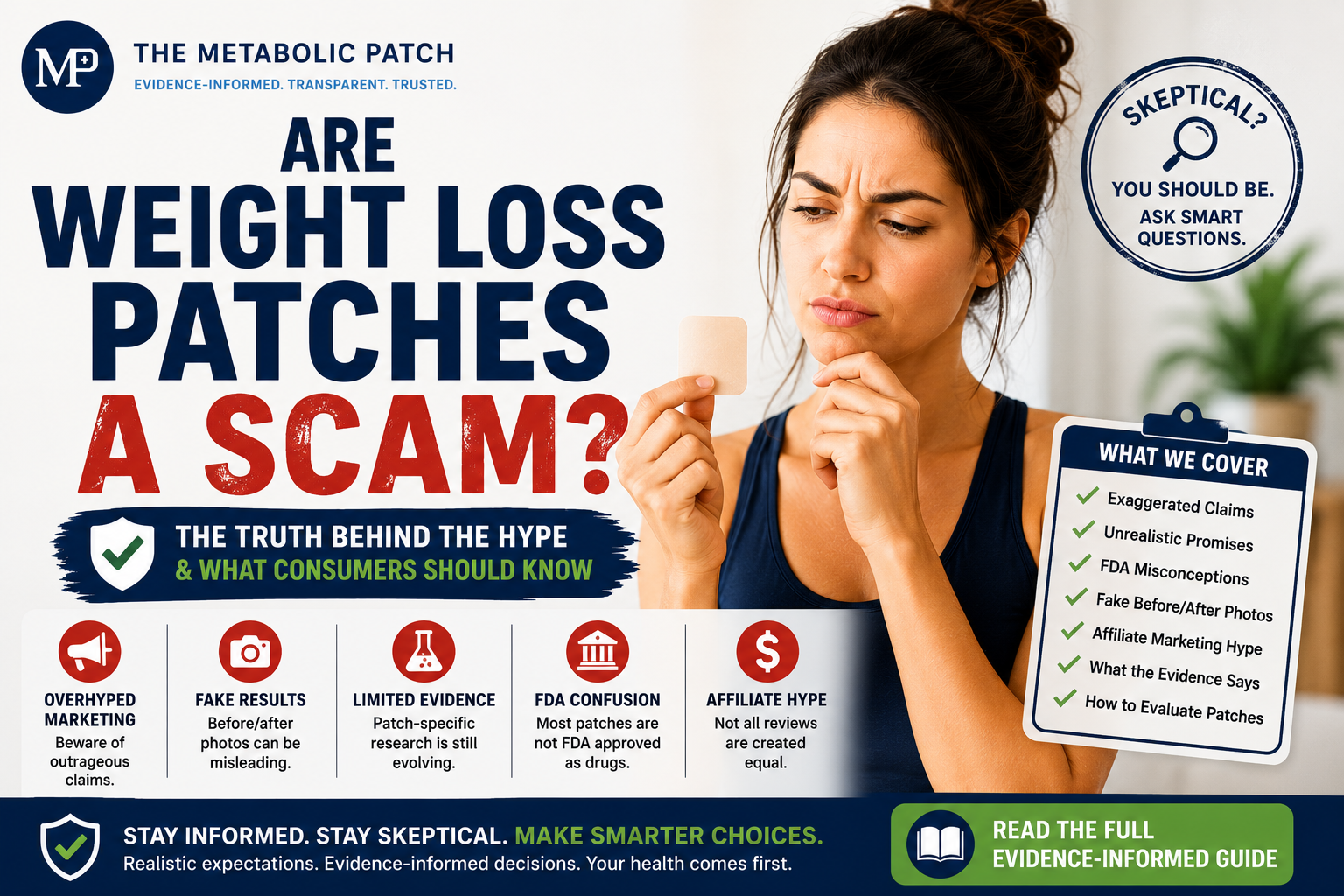
Weight loss patches have become increasingly popular as wearable wellness products marketed for appetite support, metabolism, energy, and weight-management routines. However, as interest in transdermal wellness products grows, many consumers are asking an important question: Are weight loss patches actually legitimate — or are they simply another wellness scam? The reality is more nuanced than many marketing campaigns suggest. Some wearable wellness patches may offer supportive ingredient delivery and help certain individuals stay more consistent with broader lifestyle habits. However, many products in the category are also promoted using exaggerated marketing claims, unrealistic before-and-after photos, “overnight fat loss” promises, and misleading advertising language.
This article examines:
- whether weight loss patches are legitimate
- why skepticism exists around the category
- common marketing red flags
- what scientific evidence currently says
- how to evaluate products more carefully
- realistic expectations for wearable wellness patches
Readers exploring broader transdermal wellness topics may also want to review our guides on:
- Are Metabolic Patches FDA Approved?
- Transdermal Supplements
- Best Weight Loss Patches
- Berberine Patch Safety
Why Some People Believe Weight Loss Patches Are a Scam
One reason skepticism exists around weight loss patches is because many products are marketed using extremely aggressive advertising tactics. Consumers are often exposed to claims such as: “Lose weight while sleeping”, “Melt fat overnight”, “Burn belly fat instantly”, “No diet or exercise needed”, and “Guaranteed rapid transformation”. These types of promises create unrealistic expectations and may contribute to distrust within the category. In reality, long-term body composition changes are typically influenced by multiple factors, including: nutrition, calorie balance, physical activity, sleep quality, stress management, consistency of habits, and metabolic variability. No wearable wellness patch should realistically be viewed as a standalone solution capable of replacing foundational health behaviors.
Do Weight Loss Patches Actually Work?
The answer depends heavily on: the ingredients used, the delivery system, the quality of formulation, individual response, consistency of use, and accompanying lifestyle habits. Some patches contain ingredients commonly associated with metabolism or appetite-support discussions, including: berberine, caffeine, green tea extract, chromium, B vitamins, and herbal compounds. However, while some ingredients may have supportive research in oral supplement form, direct clinical evidence involving patch-based delivery systems remains more limited. This is an important distinction. Consumers often assume that because an ingredient has research behind it orally, the same level of evidence automatically exists for patch delivery. That is not always the case. Our guide on Transdermal Supplements explains these limitations in more detail.
The Problem With “Overnight Fat Loss” Marketing
One of the largest red flags in the weight loss patch category is the use of unrealistic transformation claims. Be cautious of products claiming: immediate dramatic fat loss, effortless body transformation, guaranteed results, “scientifically proven rapid weight loss”, instant metabolism activation, and permanent fat reduction without lifestyle change. These types of statements often oversimplify complex metabolic processes. Sustainable weight management typically develops gradually over time through consistent routines rather than instant dramatic changes. Consumers should also remember that: metabolism differs between individuals, adherence matters, placebo effects can influence perception, motivation changes outcomes, and habits influence long-term results more than short-term novelty.
Are Before-and-After Photos Always Reliable?
Not necessarily. Some marketing campaigns use highly selective before-and-after imagery that may not represent typical experiences. Factors that can influence these images include: lighting, posing, camera angles, temporary water-weight changes, editing, unrelated lifestyle changes, and selective reporting. This does not automatically mean every company is dishonest, but consumers should approach dramatic visual transformations cautiously. Realistic wellness expectations are generally more trustworthy than exaggerated promises.
FDA Misconceptions and Consumer Confusion
Many consumers incorrectly assume that wellness patches are “FDA approved.” In reality, most dietary supplements and wellness products are not individually FDA approved before being sold. This creates confusion because: some brands use medical-style marketing, packaging may appear clinical, consumers associate patches with prescription medications, and “manufactured in FDA-registered facilities” is often misunderstood. These statements do not necessarily mean a product itself has undergone formal FDA approval. Readers can learn more in our article: Are Metabolic Patches FDA Approved?
Affiliate Hype and Influencer Marketing
Another reason skepticism exists is because some affiliate marketers and influencers promote products using exaggerated earnings-driven marketing. This can include: unrealistic testimonials, emotionally manipulative sales copy, fake urgency, exaggerated success stories, unsupported medical claims, and misleading “doctor recommended” language. At The Metabolic Patch, our goal is to approach wearable wellness products using a more evidence-informed and balanced framework focused on: ingredient transparency, safety considerations, realistic expectations, scientific limitations, product comparisons, and consumer education.
How to Evaluate Weight Loss Patches More Carefully
Consumers researching wearable wellness patches should consider asking:
Does the product make unrealistic promises?
Extreme claims are often a warning sign.
Are ingredients clearly disclosed?
Transparent labeling is generally preferable to “proprietary mystery blends.”
Does the company discuss limitations?
Balanced educational content is usually more trustworthy than miracle-style marketing.
Are safety considerations discussed?
Responsible brands should acknowledge: irritation risk, ingredient sensitivity, individual variability, and medical considerations.
Is the product positioned as supportive rather than magical?
This is one of the biggest indicators of realistic marketing.
What Realistic Expectations Look Like
A more realistic evidence-informed perspective is that wearable wellness patches may function as: supportive wellness tools, consistency aids, routine-based products, and transdermal ingredient systems rather than instant transformation solutions. Some individuals may appreciate: convenience, capsule-free supplementation, wearable formats, habit consistency, and steady ingredient exposure. However, patches should generally be viewed as part of broader lifestyle strategies rather than miracle fat-loss technologies.
Final Thoughts
Not all weight loss patches are necessarily scams — but consumers should approach the category carefully and realistically. The biggest concern is often not the concept of wearable wellness patches themselves, but rather the exaggerated marketing claims sometimes surrounding them. A more balanced approach involves: skepticism toward unrealistic promises, understanding scientific limitations, evaluating ingredients carefully, maintaining realistic expectations, and prioritizing long-term health habits. Readers who are new to wearable wellness products may also want to explore our: Metabolic Patch Guide, Best Weight Loss Patches, Berberine for Weight Loss, and Transdermal Supplements for broader evidence-informed educational content.
FAQS
Are all weight loss patches scams?
No. Some products may function as supportive wellness tools, but consumers should remain cautious of exaggerated claims and unrealistic marketing.
Do weight loss patches have scientific evidence?
Some ingredients used in patches have research in oral supplement form, but patch-specific evidence is often more limited.
Can weight loss patches replace diet and exercise?
No. Long-term weight management is typically influenced by nutrition, activity, sleep, stress, and consistency of habits.
Why are people skeptical about weight loss patches?
Skepticism often comes from unrealistic marketing claims, dramatic before-and-after photos, and exaggerated promises of rapid results.
Are weight loss patches FDA approved?
Most wellness patches are not individually FDA approved before sale. Consumers should understand the difference between FDA approval and FDA-registered manufacturing facilities.
What are common red flags when evaluating weight loss patches?
Red flags may include miracle claims, hidden ingredients, fake urgency, dramatic transformation promises, and lack of safety discussion.
Can placebo effects influence results?
Possibly. Motivation, routine changes, behavioral consistency, and expectation effects may influence how some users perceive results.
Are transdermal supplements legitimate?
Transdermal delivery is a real technology, but effectiveness varies depending on ingredients, formulation quality, and scientific evidence.
RELATED ARTICLES
- Are Metabolic Patches FDA Approved?
- Best Weight Loss Patches
- Transdermal Supplements
- Berberine for Weight Loss
- Are Berberine Patches Safe?
- Metabolic Patch Guide

Explore realistic evidence discussions, transdermal supplement education, ingredient breakdowns, safety considerations, and wearable wellness comparisons without exaggerated marketing hype.
Reviewed for Accuracy & Transparency
This page was reviewed for factual accuracy, source quality, safety wording, affiliate transparency, and alignment with our editorial policy. It is not medical advice and should not replace guidance from a qualified healthcare professional.
Written by The Metabolic Patch Editorial Team
The Metabolic Patch Editorial Team researches metabolic wellness patches, ingredient claims, product safety considerations, pricing, refund policies, and affiliate transparency. Our goal is to help readers make informed decisions using evidence-informed, clearly sourced, and commercially transparent content.
Affiliate Transparency
Some links on this page may be affiliate links. If you purchase through these links, The Metabolic Patch may earn a commission at no extra cost to you. Our reviews are designed to remain evidence-informed, safety-conscious, and transparent.
Important Safety Note
Dietary supplements and wellness patches are not intended to diagnose, treat, cure, or prevent disease. If you are pregnant, breastfeeding, taking medication, managing a medical condition, or have sensitive skin, speak with a qualified healthcare professional before using any new supplement or patch product.