
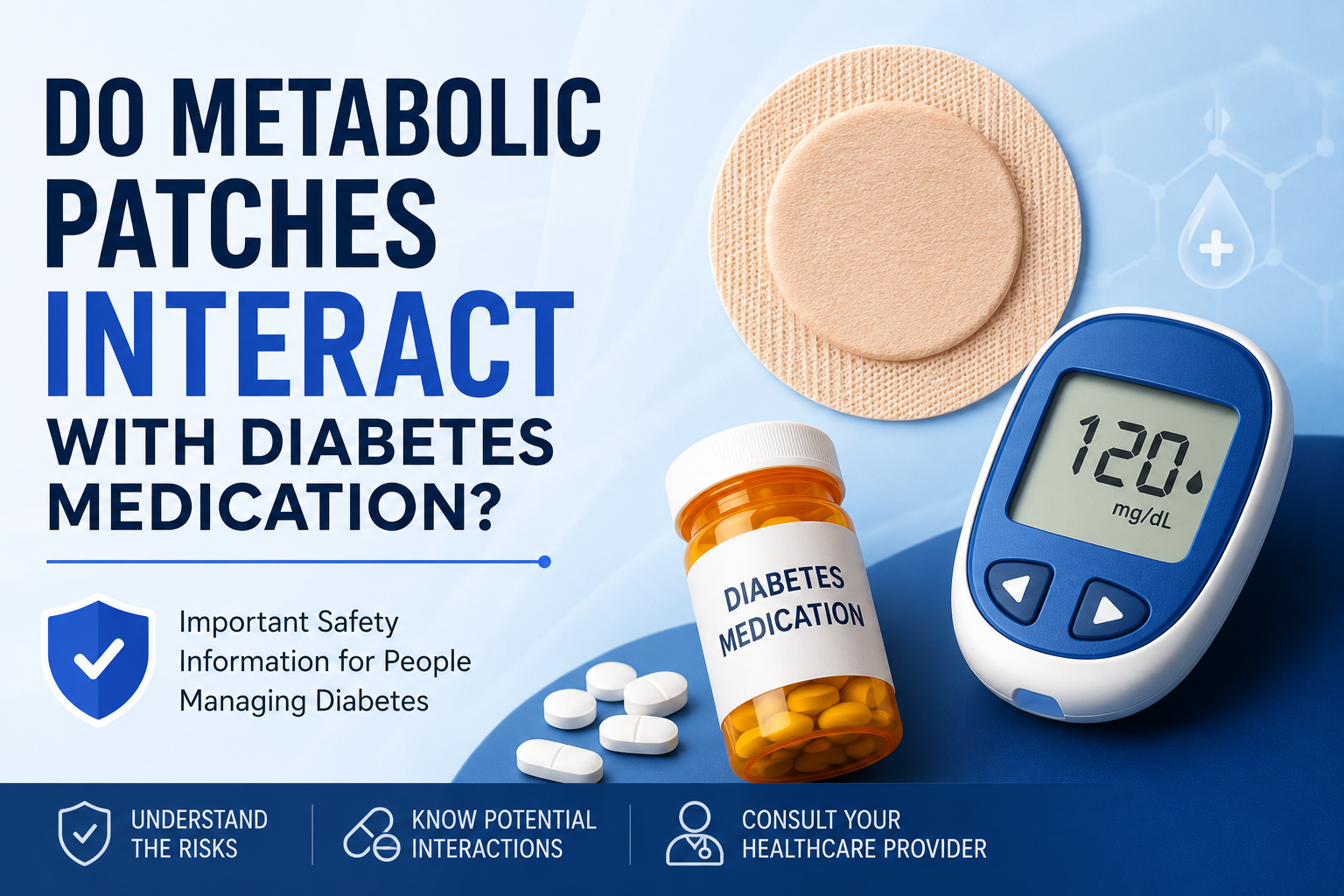
Many people exploring metabolic patches are interested in ingredients that may support blood sugar management, weight control, or metabolic health. Because some patches contain ingredients such as berberine and botanical extracts, an important question often arises:
Can metabolic patches interact with diabetes medication?
The short answer is that potential interactions may be possible depending on the ingredients contained within the patch and the medications being used. While research specifically examining metabolic patches and diabetes medications remains limited, certain ingredients commonly found in wellness supplements have been studied for their effects on glucose metabolism.
This guide explains what consumers should know about metabolic patches and diabetes medication, when additional caution may be appropriate, and why healthcare provider guidance is important.
Why Interaction Concerns Exist
Many diabetes medications are designed to help regulate blood sugar levels. Some ingredients found in metabolic patches may also be associated with blood sugar support.
When multiple products influence the same biological pathway, there is the possibility that their effects could overlap.
For example, some metabolic patches contain:
- Berberine
- Green tea extract
- Botanical compounds associated with glucose metabolism
- Vitamin and mineral blends intended to support metabolic wellness
Although a patch delivers ingredients differently than a capsule, consumers should still carefully review ingredient labels before use.
What About Berberine?
Berberine is one of the most common ingredients found in metabolic and weight-loss patches. According to the National Institutes of Health Office of Dietary Supplements, berberine has been studied for its potential role in glucose metabolism and insulin sensitivity.
Why Extra Caution May Be Needed
- May influence blood sugar regulation
- Often included in metabolic patch formulas
- Can overlap with the goals of diabetes medications
- May warrant additional monitoring and professional guidance
Learn more: Berberine and Blood Sugar: What to Know
Can Metabolic Patches Cause Low Blood Sugar?
Low blood sugar, also known as hypoglycemia, can occur when blood sugar levels drop too far.
Whether a metabolic patch could contribute to this risk depends on several factors, including:
- The ingredients contained in the patch
- The amount delivered
- The type of diabetes medication being used
- The individual’s overall health status
Because patch absorption varies among products and individuals, predicting exact effects can be difficult.
This uncertainty is one reason healthcare professionals often recommend caution when combining supplements with diabetes medications.
Who Should Speak With Their Healthcare Provider First?
Before using a metabolic patch, additional caution may be appropriate if any of the following apply to you:
Even when a patch is marketed as a wellness product, its ingredients should still be reviewed carefully.
What We Know About Patch-Based Delivery
Unlike traditional capsules, metabolic patches use transdermal delivery, meaning ingredients are applied to the skin.
However, transdermal delivery does not automatically eliminate the possibility of interactions.
If an ingredient is absorbed and enters circulation, healthcare providers may still consider potential interactions when evaluating safety.
For a broader overview, see Transdermal Supplements: Do They Really Work?.
Warning Signs You Should Seek Medical Advice
If you use diabetes medication and experience unusual symptoms after starting a metabolic patch, discontinue use and speak with a healthcare professional.
These symptoms can have many causes, but they should never be ignored.
How To Use Metabolic Patches More Safely
If your healthcare provider approves the use of a metabolic patch, consider the following precautions:
- Review all ingredients carefully
- Follow manufacturer instructions
- Monitor blood sugar as directed
- Avoid combining multiple glucose-support products without professional guidance
- Stop use if unexpected symptoms occur
Final Thoughts
While research specifically examining metabolic patches and diabetes medications remains limited, some ingredients commonly found in patches have been studied for their effects on blood sugar metabolism.
For this reason, individuals using diabetes medications should carefully review ingredients and discuss new supplement products with their healthcare provider before use.
The safest approach is to prioritize transparency, monitor blood sugar appropriately, and seek professional guidance whenever questions about potential interactions arise.
FAQ
Can metabolic patches affect blood sugar?
Some ingredients commonly found in metabolic patches may be associated with blood sugar support, although effects vary depending on formulation and individual factors.
Can I use a metabolic patch while taking metformin?
You should consult your healthcare provider before combining any supplement product with prescription diabetes medication.
Can berberine patches interact with diabetes medication?
Because berberine has been studied for its effects on glucose metabolism, individuals using diabetes medications should exercise caution and seek professional guidance.
Can metabolic patches cause low blood sugar?
Potential effects depend on the ingredients, dosage, medication use, and individual circumstances. Monitoring and professional guidance are recommended.
Should people with diabetes avoid metabolic patches?
Not necessarily, but people with diabetes should speak with their healthcare provider before using any metabolic patch or supplement product.
Are transdermal supplements safer than capsules for people with diabetes?
Not automatically. Safety depends on the ingredients involved, the amount absorbed, and the individual’s health circumstances.
New to Metabolic Patches?
Before trying any patch-based supplement, learn how metabolic patches work, what ingredients they may contain, and the key safety considerations for people managing blood sugar and metabolic health.

Reviewed for Accuracy & Transparency
This page was reviewed for factual accuracy, source quality, safety wording, affiliate transparency, and alignment with our editorial policy. It is not medical advice and should not replace guidance from a qualified healthcare professional.
Written by The Metabolic Patch Editorial Team
The Metabolic Patch Editorial Team researches metabolic wellness patches, ingredient claims, product safety considerations, pricing, refund policies, and affiliate transparency. Our goal is to help readers make informed decisions using evidence-informed, clearly sourced, and commercially transparent content.
Important Safety Note
Dietary supplements and wellness patches are not intended to diagnose, treat, cure, or prevent disease. If you are pregnant, breastfeeding, taking medication, managing a medical condition, or have sensitive skin, speak with a qualified healthcare professional before using any new supplement or patch product.
References & Educational Sources
This article was prepared using evidence-informed editorial standards and reviewed against reputable public health and medical education resources relating to dietary supplements, diabetes management, blood sugar regulation, and supplement safety.